

If you are looking for a laser prostate surgery expert in Delhi, Dr. Ashish Saini is among the most experienced choices, with an MCh in Urology from AIIMS, New Delhi, more than fifteen years of practice, and over 21,000 surgeries. He specialises in advanced, minimally invasive laser treatment for enlarged prostate, including HoLEP and ThuFLEP, which clear the obstruction with no external cuts and a fast recovery. Men come to him for laser prostate surgery from across Delhi NCR, at Excel Advanced Urology Center in Greater Kailash, New Delhi.
What is Laser Prostate Surgery?
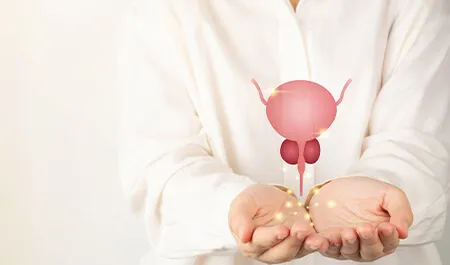
Laser prostate surgery is a modern, minimally invasive way to treat an enlarged prostate, the condition doctors call benign prostatic hyperplasia or BPH. As the prostate gland grows, it squeezes the urethra and blocks the flow of urine, a problem known as bladder outlet obstruction. Laser surgery uses precise, high-energy light to remove or vaporise the overgrown tissue and reopen the channel.
The whole procedure is done through the urethra using a thin scope, so there are no external cuts and no stitches. This is why it is often described as scarless or bloodless prostate surgery. Compared with older open operations, it means less bleeding, less pain, a shorter hospital stay, and a quicker return to normal life.
Types of Laser Prostate Surgery
There are several laser techniques for treating an enlarged prostate, and the best one depends on the size of the gland and the patient’s overall health.
HoLEP (Holmium Laser Enucleation of the Prostate)
Uses a holmium laser to enucleate, or peel away, the obstructing tissue in one piece. It is highly effective even for very large prostates and gives long-lasting results. Dr. Saini performs HoLEP and ThuFLEP as core procedures.
ThuFLEP and ThuLEP (Thulium Laser Enucleation)
Use a thulium laser to achieve the same enucleation with very precise cutting and excellent bleeding control, which makes it a strong option for men on blood thinners.
GreenLight Laser (Photoselective Vaporisation)
Vaporises prostate tissue and is sometimes used for smaller to medium glands.
Diode Laser
It is another vaporisation technique used in some centres.

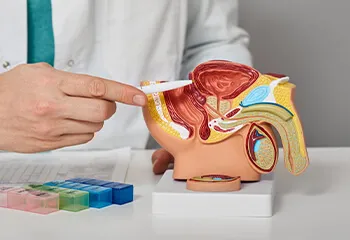
Techniques like HoLEP and ThuFLEP are generally preferred for larger prostates because they remove more tissue and rarely need to be repeated.
Techniques like GreenLight and diode laser vaporise the overgrown tissue and are sometimes used for smaller to medium glands.
Across all of these, the two broad approaches are laser enucleation, which removes tissue, and laser vaporisation, which evaporates it. Enucleation techniques like HoLEP and ThuFLEP are generally preferred for larger prostates because they remove more tissue and rarely need to be repeated.
Laser Prostate Surgery vs TURP
Usually causes less bleeding, needs a shorter catheter time and hospital stay, and can be done safely on men taking blood thinners or those with very large glands.
For many years, transurethral resection of the prostate was the standard operation, and Dr. Saini also performs it.
For many years, TURP (transurethral resection of the prostate) was the standard operation, and it is still a good procedure that Dr. Saini also performs. The difference is that laser surgery usually causes less bleeding, needs a shorter catheter time and hospital stay, and can be done safely on men taking blood thinners or those with very large glands. For elderly patients and those with heart or other health conditions, this lower risk profile is a real advantage. Both work well, and Dr. Saini will explain which suits your case after a proper assessment.
Symptoms That May Need Prostate Treatment
Most men come in because daily life is being disrupted by urinary symptoms, often called lower urinary tract symptoms (LUTS). These include:
- A weak or slow urine flow
- Frequent urination, especially at night (nocturia)
- Difficulty starting or a stop-and-start stream
- A sudden, urgent need to go
- A feeling of incomplete bladder emptying
- Straining to pass urine, or dribbling at the end
- In severe cases, sudden inability to urinate, known as urinary retention
Ignoring these can lead to recurrent infections, bladder stones, urinary retention, and kidney strain, so it is worth getting checked early rather than waiting.
Why Choose Dr. Ashish Saini for Laser Prostate Surgery
Laser prostate surgery is a skill-dependent procedure, and outcomes are closely linked to how often the surgeon performs it. Dr. Saini brings AIIMS-level training and a high surgical volume to every case, having handled prostates of every size, from straightforward glands to very large and complex ones that many centres hesitate to treat with laser.
His approach is minimally invasive by default, and he focuses on preserving quality of life, including sexual function wherever possible. You are assessed and operated on by Dr. Saini personally, with a clear explanation of the technique, the recovery, and what to expect at every stage.
Read more about Dr. SainiHow an Enlarged Prostate is Diagnosed
The right treatment starts with an accurate diagnosis. Dr. Saini’s assessment usually includes:
Digital rectal examination
Feels the size and feel of the gland.
PSA blood test
Prostate-specific antigen test to help rule out prostate cancer.
Ultrasound
Of the prostate and bladder to measure gland size and check for retained urine.
Uroflowmetry
Measures urine flow.
Cystoscopy
Where needed, to look directly inside the urethra and bladder.
Your laser plan
Together these confirm the diagnosis and guide the choice of laser technique.
Recovery and Safety After Laser Prostate Surgery
Hospital stayUsually one day
Recovery is one of the biggest reasons men choose laser surgery.
CatheterWithin a day or two
Most men notice a stronger stream and far fewer night-time trips almost immediately.
Normal routineOne to two weeks
Light activity resumes within a few days.
Recovery is one of the biggest reasons men choose laser surgery. The hospital stay is usually a single day, and the catheter is generally removed within a day or two. Most men notice a stronger urine stream and far fewer night-time trips almost immediately. Light activity resumes within a few days, with a return to full routine over one to two weeks.
Laser prostate surgery is safe and well established, with low complication rates. Any side effects, such as mild burning, urgency, or a little blood in the urine, are usually temporary and settle quickly. Serious complications are uncommon, particularly in experienced hands.
View All ProceduresServing Prostate Patients Across Delhi and Delhi NCR
Men come to Excel Advanced Urology Center for laser prostate surgery from every part of the region, including New Delhi, South Delhi, North Delhi, East Delhi, and West Delhi. Patients travel in from areas such as Greater Kailash, Saket, Lajpat Nagar, Vasant Kunj, Dwarka, Rohini, Janakpuri, Pitampura, and Karol Bagh, as well as Noida, Gurgaon, Faridabad, and Ghaziabad. The clinic also supports out-of-town and international patients who travel in for surgery. See clinic location and directions.
What Our Patients Say
Many men delay prostate surgery for years out of fear of cuts, pain, or a long recovery. After laser treatment, what they most often mention is how quick and straightforward it was, and the relief of sleeping through the night again. You can read their experiences on the patient testimonials page.
Read Patient ReviewsVisit the Prostate Clinic at Excel Advanced Urology Center
Address
Excel Advanced Urology Center
Ground and First Floor, C-48A, Hansraj Gupta Road, C-Block, Greater Kailash 1, New Delhi 110048
Phone & Email
011-79685083
+91-96434-38106
+91-85950-80601
Online consultation: +91-97170-27003
contact@drashishsaini.com
Clinic Hours
Monday to Saturday
10:30 AM to 1:00 PM
5:30 PM to 7:30 PM
Sunday closed
FAQ’s
Questions asked by new visitors