

Dr Ashish Saini, urologist, treats enlarged prostate (BPH) with medicines, minimally invasive procedures and surgery. He holds an MCh in Urology from AIIMS, New Delhi, has more than fifteen years of experience, and has completed over 21,000 urology and andrology surgeries. Treatment aims to relieve urinary symptoms; where possible, options that may preserve ejaculation are discussed. He sees patients from across Delhi NCR at Excel Advanced Urology Center in Greater Kailash, New Delhi.
What is BPH (Benign Prostatic Hyperplasia)?
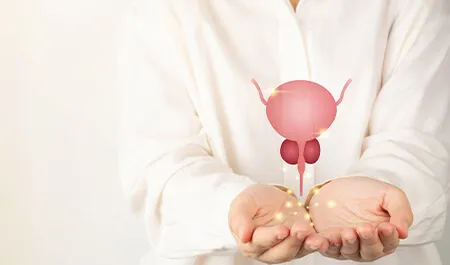
BPH, or benign prostatic hyperplasia, is a non-cancerous enlargement of the prostate gland. It is one of the most common conditions in ageing men. More than half of men in their sixties, and up to ninety percent of men in their seventies and eighties, have some degree of prostate enlargement.
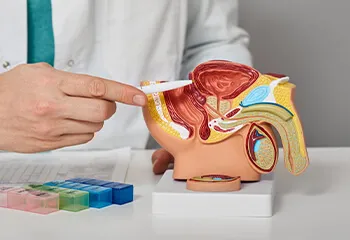
The prostate sits just below the bladder and wraps around the urethra, the tube that carries urine out of the body. As the gland grows, it squeezes the urethra and makes it harder to empty the bladder. BPH is not cancer and is not life-threatening, but it can seriously affect quality of life if left untreated.
Symptoms of an Enlarged Prostate
Enlarged prostate symptoms, often called lower urinary tract symptoms, tend to come on gradually. The common ones include:
- Frequent urination, especially during the day
- Waking up several times at night to urinate (nocturia)
- A weak or slow urine stream
- Difficulty starting urination, or a stop-and-start flow
- A sudden, urgent need to urinate
- Dribbling at the end of urination
- A feeling that the bladder is never fully empty
- In some cases, burning during urination or blood in the urine
If these symptoms sound familiar, they are worth getting checked. Left untreated, an enlarged prostate can lead to urinary retention, bladder stones, repeated infections, and even kidney damage.

What Causes an Enlarged Prostate?
The exact cause of BPH is not fully understood, but it is closely linked to ageing and the hormonal changes that come with it. As men grow older, the balance between testosterone and other hormones shifts, and this is believed to trigger prostate growth. Several factors raise the risk:
- Age, with risk rising sharply after fifty
- A family history of prostate problems
- Diabetes and heart disease
- Obesity and a sedentary lifestyle
- A diet high in animal fat and low in fruit and vegetables
BPH is rare in men under forty, becomes common after fifty, and affects the majority of men by their sixties and seventies. While the enlargement itself cannot always be prevented, staying active, keeping a healthy weight, and getting checked early all help keep symptoms under control.
Dr Saini's Approach to BPH
Dr Saini trained in urology at AIIMS New Delhi. He offers medical treatment, minimally invasive procedures and surgery, chosen according to prostate size and symptoms.
His approach is laser-first and minimally invasive wherever possible, which usually means little or no cutting, minimal bleeding, a short hospital stay, and a quick return to normal life. Just as important, he offers a full menu of ejaculation-preserving prostate treatmentsThe effect of each option on ejaculation and erections is discussed before treatment.
Read more about Dr. SainiHow BPH is Diagnosed
Accurate diagnosis decides the right treatment, so Dr. Saini begins with a careful evaluation. This usually includes:
Digital rectal examination
Feels the size of the gland.
PSA blood test
Prostate-specific antigen test to help rule out prostate cancer.
Ultrasound
Of the prostate and bladder.
Uroflowmetry
Measures how fast urine flows.
A symptom score is also used to grade the severity from mild to severe.
Is BPH the Same as Prostate Cancer?
It is a non-cancerous enlargement of the prostate, and having BPH does not increase your risk of prostate cancer.
The two conditions can cause very similar urinary symptoms, and a raised PSA level can occur in both.
A proper evaluation, including the PSA test and physical examination, helps Dr. Saini tell them apart and rule out cancer before starting any treatment. to check for other causes
BPH Treatment Options in Delhi NCR
There is no single best treatment for every man. The right choice depends on prostate size, symptom severity, age, and whether sexual function needs to be preserved. Dr. Saini offers the complete range.
Medication
For mild to moderate symptoms, alpha-blockers relax the muscles of the prostate and bladder neck to improve flow, while 5-alpha reductase inhibitors gradually shrink the gland. Medication is often the first step.
Minimally Invasive, Ejaculation-Preserving Procedures
some day-care procedures may relieve symptoms with a lower chance of ejaculation problems than surgery These include UroLIFT, which lifts and holds the enlarged tissue aside without cutting; Rezum, which uses water vapour to shrink the gland; and iTind, a temporary implant that reshapes the prostate channel.
Laser and Surgical Treatment
For larger prostates or more severe symptoms, laser surgery removes the obstructing tissue with precision. Dr. Saini performs ThuFLEP and HoLEPlaser enucleation (HoLEP, ThuFLEP), which can be used for large glands TURP, the long-established standard procedure. For men whose main problem is at the bladder neck, he also offers ejaculation-preserving Laser BNI.
Which BPH Treatment is Right for You?
The right procedure depends mainly on the size of the prostate and how troublesome the symptoms are.
Moderate symptomsSmaller glands
UroLift, Rezum and iTind may suit men with moderate symptoms and smaller glands; symptom relief is usually less than with TURP or laser enucleation, and retreatment is more likely.
Commonly treatedMedium-sized prostates
Medium-sized prostates are commonly treated with TURP or laser.
Laser enucleationVery large glands
can remove a large amount of tissue in one procedure
Dr. Saini recommends the option that balances symptom relief, recovery time, and sexual function for your particular case, rather than a one-size-fits-all approach.
View All ProceduresWhat to Expect After BPH Treatment
UroLIFT & RezumOften day-care
Many men go home the same day.
Laser & TURPShort hospital stay
A day or two, sometimes with a temporary catheter removed within a few days.
Back to routineWithin weeks
Light activity within a few days, full routine over the following weeks.
Recovery depends on the procedure chosen. Laser surgery and TURP may involve a short hospital stay of a day or two, sometimes with a temporary catheter that is removed within a few days. Many men notice a stronger stream; night-time symptoms may take longer to settle. Dr. Saini and his team guide every patient through aftercare and follow-up, so you always know what comes next.
Serving Prostate Patients Across Delhi and Delhi NCR
Men come to Excel Advanced Urology Center for enlarged prostate treatment from across the region, including West, North, East, and Central Delhi, Dwarka, Rohini, and South Delhi areas like Greater Kailash and CR Park, as well as Noida, Gurgaon, Faridabad, and Ghaziabad. The clinic also supports out-of-town and international patients who travel in for surgery. See clinic location and directions.
What Our Patients Say
BPH symptoms often develop slowly, and some men manage mild symptoms with lifestyle changes and regular review. You can read their experiences on the patient testimonials page.
Read Patient ReviewsVisit the Prostate Clinic at Excel Advanced Urology Center
Address
Excel Advanced Urology Center
Ground and First Floor, C-48A, Hansraj Gupta Road, C-Block, Greater Kailash 1, New Delhi 110048
Phone & Email
011-79685083
+91-96434-38106
+91-85950-80601
Online consultation: +91-97170-27003
contact@drashishsaini.com
Clinic Hours
Monday to Saturday
10:30 AM to 1:00 PM
5:30 PM to 7:30 PM
Sunday closed
FAQ’s
Questions asked by new visitors