Surgery Available
Yes
Hospitalization Required
- Usually not required for most laser and endoscopic procedures (URS, SWL).
- May be needed for large stone removal (PCNL) or complex cases.
Lab Tests Facility
Available (Blood tests, Urine tests, Stone analysis).
Emergency Treatment
Available — 24×7 for cases with severe pain, infection, or obstruction.
In-Patient Facilities
Available (Single, Deluxe & Suite rooms).
Imaging Facility
Available (Ultrasound, NCCT KUB, X-ray KUB).
Same-Day Appointment
Available — Quick consultation slots through WhatsApp or phone.
Recovery Rate
Recovery rates are high with laser procedures.
Most patients resume normal activity within 2–5 days after URS; 1–2 weeks for PCNL.
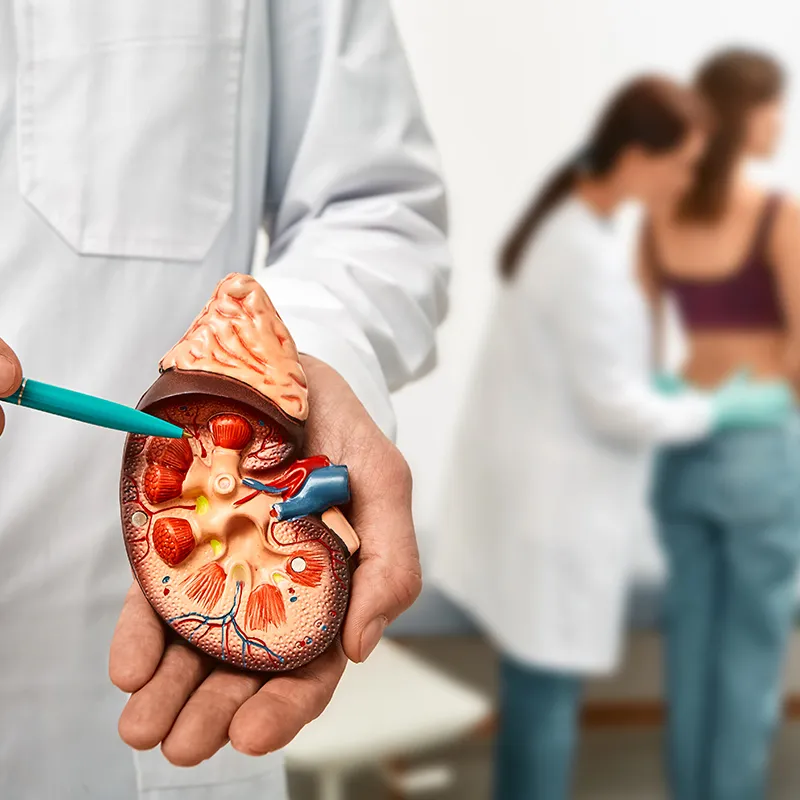
Meet Dr. Ashish Kumar Saini — Leading Urologist & Kidney Stone Specialist in Delhi NCR
Dr. Ashish Kumar Saini, MCh (Urology, AIIMS New Delhi), is one of the most trusted Kidney Stone Doctors in Delhi NCR with 12+ years of expertise and 21,000+ surgeries performed. A former Assistant Professor at AIIMS, he specializes in laser kidney stone surgery, URS, and PCNL with high success and minimal recovery time. At his Excel Advanced Urology Center, South Delhi, Dr. Saini offers advanced, patient-centric care using the latest endoscopic and laser technology. If you’re searching for a Urologist near AIIMS, Saket, or South Delhi for safe and effective laser stone removal, book your consultation today.
Kidney Stone Treatment in Delhi — Laser, Minimally Invasive & Surgical Removal by Dr. Ashish Saini
If you’re facing sudden flank pain, blood in urine, or repeated kidney stones, expert help in Delhi is available. Dr. Ashish Kumar Saini — MCh (Urology), DNB (Genitourinary Surgery), former Asst. Professor at AIIMS — provides advanced kidney stone treatment including laser lithotripsy, ureteroscopy (URS), shockwave lithotripsy (SWL/ESWL) and percutaneous nephrolithotomy (PCNL). We focus on fast relief, high stone-free rates, minimal downtime and clear, patient-centered care. Book a consultation by WhatsApp or phone today.
What are kidney stones?
Kidney stones (nephrolithiasis) are hard mineral deposits that form in the kidney or urinary tract. They vary in size — from grain-like crystals to larger stones that can block urine flow and cause severe pain. Stones are commonly made of calcium oxalate, calcium phosphate, uric acid, struvite (infection stones) or cystine.
Symptoms — When to see a urologist right away
- Severe, colicky flank pain that may radiate to the groin
- Blood in urine (visible or microscopic hematuria)
- Fever or chills with pain (possible infection — urgent)
- Nausea, vomiting or inability to pass urine
If you have fever or severe pain, contact us immediately — these can be signs of infection or urinary blockage requiring urgent treatment.
How we diagnose kidney stones
We use a combination of clinical evaluation and targeted testing to choose the safest and most effective treatment:
- Imaging: Ultrasound for initial screening and follow-up; non-contrast CT scan (NCCT) for precise stone size, density and position when needed.
- Urine tests: Urinalysis for blood, infection and crystals; 24-hour urine collection for recurrent stone formers.
- Blood tests: Kidney function and metabolic workup as indicated.
- Stone analysis: If you pass or we remove a stone, lab analysis identifies type and directs prevention.
Kidney stone treatment options we offer
We individualize treatment based on stone size, location, composition, symptoms and patient health.
Conservative management (watchful waiting)
For small stones likely to pass (<4–6 mm depending on location), we may recommend hydration, pain control and medications like alpha-blockers (e.g., tamsulosin) to relax the ureter and improve passage. Regular follow-up imaging ensures the kidney is not obstructed.
Shockwave lithotripsy (SWL / ESWL)
Non-invasive external shock waves break stones into fragments that pass in urine. Suitable for many kidney and upper ureter stones depending on size and composition. Can require multiple sessions.
Ureteroscopy with Laser Lithotripsy (URS + Laser)
A flexible ureteroscope is passed through the urethra and bladder into the ureter/kidney; a Holmium laser fragments stones which are removed or left to pass. Ideal for ureteral stones and many renal stones — high stone clearance, short recovery, often same-day discharge.
Percutaneous Nephrolithotomy (PCNL)
Recommended for large renal stones (including staghorn calculi). A small incision in the back allows a nephroscope into the kidney; stones are fragmented and suctioned out. Best success for large stone burden.
Laparoscopic / Robotic / Open surgery
Rarely required today, used only when less invasive methods fail or anatomy dictates.
Why laser lithotripsy is commonly recommended
Laser lithotripsy (Holmium laser) is extremely precise, works through the ureteroscope, and is effective across stone types and locations. Advantages:
- High stone-free rates for many stone types
- Minimally invasive — no external incisions
- Short hospital stay; quick recovery
- Lower risk of major complications when performed by experienced endourologists
How we decide the best treatment for you
Decision factors include:
- Stone size (mm)
- Stone location (kidney pelvis, calyx, ureter)
- Stone density on CT (Hounsfield units)
- Presence of infection or obstruction
- Patient comorbidities and preferences
Dr. Saini reviews your imaging and offers a clear recommendation — sometimes combining procedures or planning staged treatment for large stones.
Costs & insurance (how pricing works)
Treatment cost varies with procedure, facility choice (hospital vs. day-care), anesthesia and consumables (stent, disposables). We provide:
- Transparent estimates at consultation
- Insurance support and cash-pay options
- Help with pre-authorization where applicable
Note: Exact cost ranges are discussed after imaging and a clinical review — contact us for a tailored estimate.
What to expect on the procedure day & recovery
- Pre-op: Blood tests, anesthesia review and instructions (fasting etc.)
- Anesthesia: Regional or general depending on procedure.
- Procedure time: Typically 30–120 minutes depending on complexity.
- Post-op: Most URS and laser cases are same-day; PCNL may require overnight stay. Temporary stents are commonly used and removed after a few days.
- Recovery: Return to routine activity in a few days for URS; 1–2 weeks for PCNL. Expect some blood in urine and mild discomfort while fragments pass.
Outcomes & safety
Dr. Saini and the team follow evidence-based protocols to maximize stone-free rates and minimize complications. We discuss:
- Expected success (stone-free) rates for your procedure
- Possible risks: bleeding, infection, temporary stent discomfort, rare ureteral injury
- Steps we take to reduce risk: peri-operative antibiotics, careful imaging, and follow up.
Preventing future stones (long-term plan)
Prevention is essential. We provide personalized plans:
- Hydration targets and fluid strategies
- Dietary adjustments (manage oxalates, sodium, animal protein)
- Medications for specific metabolic issues (potassium citrate, thiazide diuretics, allopurinol)
- 24-hour urine testing for recurrent stone formers
Know the doctor — Dr. Ashish Kumar Saini (experience & expertise)
Dr. Ashish Kumar Saini brings over a decade of focused urology experience and has performed over 21,000 surgeries across endourology, robotic urology, uro-oncology and reconstructive procedures. His qualifications:
- MBBS, MS (Surgery) — King George Medical College, Lucknow
- MCh (Urology) — All India Institute of Medical Sciences (AIIMS)
- DNB (Genitourinary Surgery)
- ~4 years as Assistant Professor, Department of Urology, AIIMS, before transitioning to private practice.
Areas of interest and procedures:
- EndoUrology and minimally invasive stone surgery (URS + laser, PCNL, SWL)
- Robotic and reconstructive urology
- Urooncology, male infertility, and penile curvature treatment
Why choose Dr. Saini: Vast surgical volume, academic training at premier institutions and a focus on minimally invasive, patient-centric care lead to better outcomes, faster recovery and excellent patient support.
Patient stories & testimonials


FAQ’s
Questions asked by new visitors