
}})
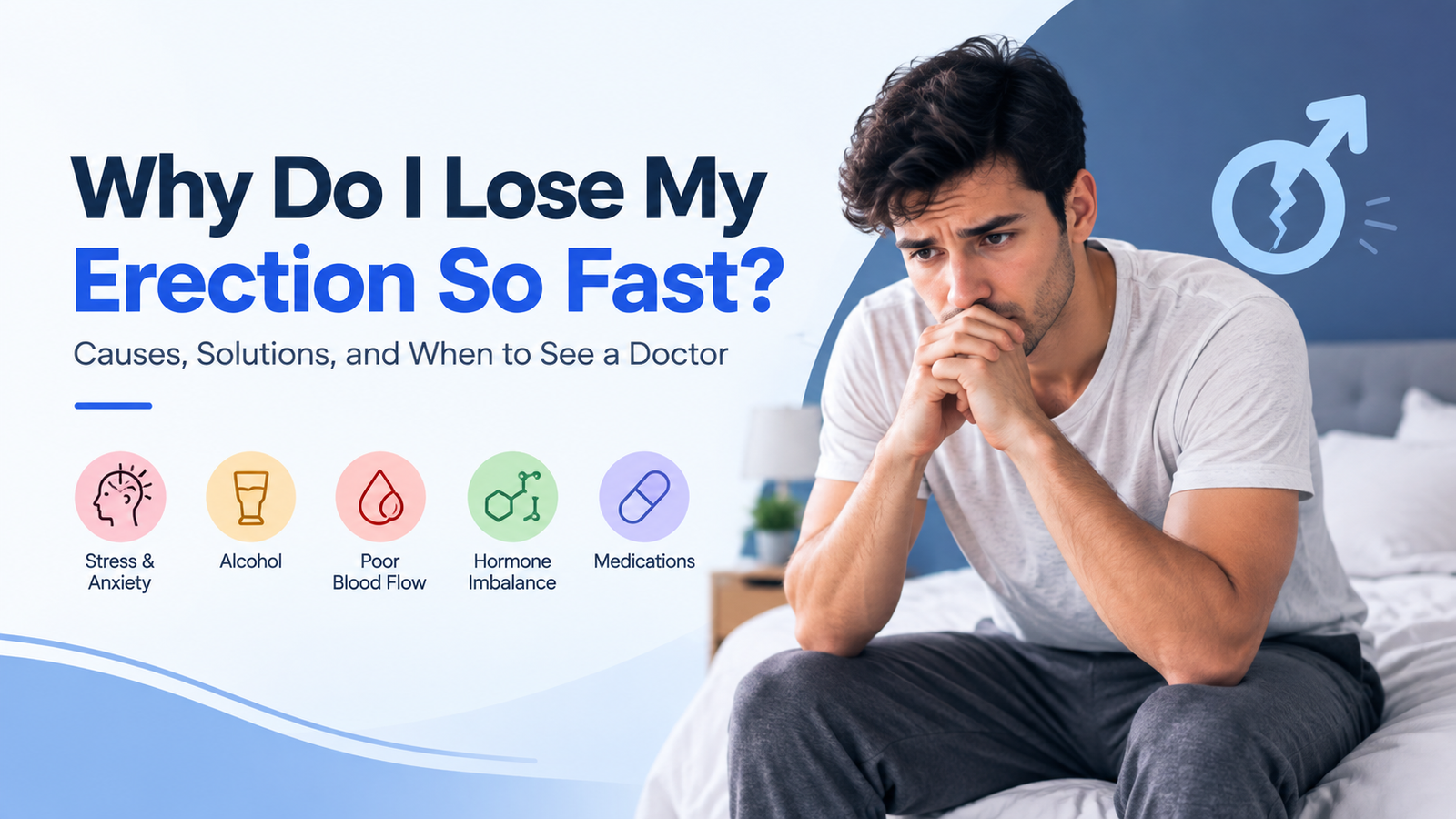
Losing an erection quickly is common and, in most men, treatable. The most frequent causes are performance anxiety, stress and fatigue, alcohol, poor blood flow, diabetes, low testosterone, and certain medications. In younger men, the cause is usually psychological or lifestyle-related, while in older men it more often points to vascular or hormonal issues. If it happens often or is affecting your confidence or relationship, it is worth seeing a urologist or andrologist. Effective treatments exist for every cause.
Losing your erection soon after getting one is one of the most private and confidence-shaking problems a man can face. The good news is that you are far from alone, and the underlying causes are almost always identifiable and treatable. This guide walks through why erections fade quickly, what different patterns usually mean, and the treatments that actually work.
What Losing an Erection Quickly Actually Means

Doctors distinguish between two very different problems. Being unable to get an erection at all is one situation. Getting an erection but losing it quickly during foreplay, penetration, or partway through sex is another. Both fall under the wider term erectile dysfunction, but they often have different causes, so it helps to know which one you are dealing with.
Losing an erection quickly can happen in several ways:
- You become erect but soften within seconds of penetration
- Your erection weakens as soon as a condom goes on
- You lose firmness partway through sex
- You lose an erection when you switch positions
- You wake up with morning erections but lose your erection during sex
Each of these patterns gives a clue to the cause, which is why an accurate history matters more than a checklist of symptoms.
Is This Erectile Dysfunction?
Yes and no. Losing an erection consistently is a form of erectile dysfunction (ED), but a man who can get an erection has a working system that just isn't holding its function. This usually means the problem is fixable with the right treatment, and often without long-term medication. It is not the same as complete ED, where the erection cannot start at all, and it does not automatically mean anything more serious. Occasional episodes are normal, especially with alcohol, fatigue, or stress, and do not by themselves indicate a medical problem.
The Main Reasons You Lose Your Erection Quickly
Performance Anxiety
The single most common cause in younger men. The anticipation of losing an erection actually triggers the very stress response that causes it, releasing adrenaline, narrowing blood vessels, and pulling blood away from the penis. It becomes a self-fulfilling cycle. Performance anxiety is often the reason a man can be firm during self-stimulation but loses his erection during partnered sex.
Stress, Fatigue, and Sleep Deprivation
Chronic stress, exhausting workloads, and poor sleep all raise cortisol and reduce testosterone, both of which weaken erections. Many men notice this pattern during high-pressure work periods and see it improve once life settles down.
Alcohol, Smoking, and Recreational Drugs
Alcohol relaxes inhibitions but impairs the nerve signalling and blood flow that keep an erection firm. A drink or two may not cause a problem; several often will. Smoking damages the small blood vessels that supply the penis over time, and recreational drugs including cocaine and ecstasy can significantly interfere with erectile function.
Poor Blood Flow (Vascular Causes)
Firm erections depend on blood flowing rapidly into the penis and being trapped there. When the arteries supplying the penis are narrowed, usually by the same process that causes heart disease, blood flow in is reduced. When the veins do not close off properly, blood leaks out, and the erection fades quickly. This is called venous leak and is a common cause of losing an erection midway through sex.
Diabetes and Metabolic Conditions
Diabetes is one of the most important medical causes of ED because it damages both the small blood vessels and the nerves that control erections. Losing erections quickly in a man over 40 is often the first noticeable sign of undiagnosed or poorly controlled diabetes, alongside other early signs like persistent foamy urine. A blood sugar check is part of any proper evaluation.
High Blood Pressure and Heart Disease
Uncontrolled high blood pressure damages the same blood vessels that supply the penis. Losing erections quickly can be an early warning sign of vascular disease, sometimes appearing years before a heart problem is diagnosed. This is why a good ED evaluation always includes cardiovascular assessment.
Low Testosterone
Testosterone plays a role in sexual desire and in the quality of erections. Low levels can cause reduced libido, softer erections, and difficulty maintaining firmness. Fatigue, low mood, and reduced muscle mass are common accompanying signs.
Medications
Many common medications can interfere with erections, including some blood pressure tablets, antidepressants, prostate medications, and antihistamines. If you started losing erections soon after beginning a new medication, this is worth mentioning to your doctor. There are often alternatives that do not affect erectile function.
Relationship or Emotional Factors
Unresolved tension with a partner, loss of attraction, depression, or a recent trauma can all show up as erection problems. Emotional causes commonly present as an inability to maintain an erection with a partner while morning erections and erections during self-stimulation remain firm.
Condom-Related Loss of Erection
Losing an erection when a condom goes on is extremely common and usually not a medical problem. It can be caused by the momentary loss of stimulation, reduced sensation, latex allergy, poor condom fit, or anxiety about condom use. Trying different sizes, thinner condoms, or non-latex options often solves it.
Pelvic Floor Weakness
The muscles at the base of the penis help trap blood inside during an erection. Weakness of these pelvic floor muscles can cause blood to leak out too quickly, leading to loss of firmness during sex. Pelvic floor exercises (Kegels for men) can genuinely improve this.
Cause by Age: Younger vs Older Men
Age matters enormously in narrowing down the likely cause.
- Under 40: Losing an erection quickly is more often psychological or lifestyle-related. Performance anxiety, stress, sleep deprivation, alcohol, recreational drugs, condom issues, and relationship factors dominate this age group. Most men respond well to lifestyle changes, counselling, and short-term medication.
- Over 40: Physical causes become more common. Vascular disease, diabetes, low testosterone, and medication side effects account for a much larger share. Losing erections quickly in this age group deserves a full medical work-up because it can be the first sign of an underlying cardiovascular or metabolic problem.
Neither pattern is absolute, and many men have a mix of causes. A proper evaluation looks at all of them.
When to See a Doctor
Book a consultation with a urologist or andrologist if:
- You lose your erection quickly regularly, not just occasionally
- It is affecting your confidence, mood, or relationship
- It happens even when you feel relaxed and interested
- You have other symptoms like low libido, fatigue, or reduced morning erections
- You have diabetes, high blood pressure, high cholesterol, or a family history of heart disease
- You started having problems after beginning a new medication
Occasional episodes with alcohol, stress, or fatigue are normal and do not need medical attention. A persistent pattern does.
How the Cause Is Diagnosed
Evaluating why you lose your erection is straightforward and confidential. A urologist will typically:
- Take a full history, including how the problem presents, morning erections, relationship context, medications, and lifestyle factors
- Perform a physical examination of the genitals, blood vessels, and general health
- Order blood tests for testosterone, blood sugar, cholesterol, thyroid function, and general health markers
- Assess cardiovascular risk, since erection problems are closely linked to heart health
- Consider specialised tests in selected cases, such as a penile Doppler ultrasound to check blood flow if venous leak is suspected
Most causes become clear from the history and basic tests. A tailored treatment plan follows from there.
Treatment Options That Work
The right treatment depends entirely on the cause. In most men, one or two targeted approaches produce significant improvement.
Lifestyle Changes
Often the first and most powerful step:
- Reduce alcohol, quit smoking, avoid recreational drugs
- Improve sleep and stress management
- Lose excess weight and exercise regularly
- Manage diabetes and blood pressure tightly
Many men see meaningful improvement from these alone.
Oral Medications
Tablets like sildenafil (Viagra) and tadalafil (Cialis) improve blood flow and are highly effective for most men. Tadalafil lasts longer and is often preferred by men who want more spontaneity. These medications work best when the underlying cause is vascular or mild venous leak, and they should always be prescribed after a proper evaluation.
Counselling and Sex Therapy
For performance anxiety, relationship stress, and psychological causes, a few sessions with a trained sex therapist or counsellor can be transformative. This is often the missing piece for younger men who otherwise have healthy bodies.
Pelvic Floor Exercises (Kegels for Men)
Strengthening the pelvic floor muscles helps trap blood in the penis and is genuinely effective for men with venous leak or mild loss of firmness. A few weeks of daily practice, ideally guided initially by a pelvic-floor physiotherapist, can improve erection quality.
Testosterone Replacement
When blood tests confirm genuinely low testosterone with matching symptoms, testosterone therapy can restore libido and improve erections. This should only be done under specialist supervision after a full evaluation.
Injection Therapy and Vacuum Devices
For men who do not respond to tablets, medications injected directly into the penis or vacuum erection devices offer reliable alternatives. These may sound intimidating but are well tolerated and highly effective when used correctly.
Penile Implants
For men with severe or refractory ED that has not responded to other treatments, penile implants offer a permanent, discreet solution that restores the ability to have an erection on demand. Modern implants are highly reliable and have excellent satisfaction rates.
Simple Habits That Improve Erection Quality
Whatever the cause, these habits support better erections in almost every man:
- Sleep seven to nine hours nightly
- Exercise regularly, especially cardiovascular exercise
- Follow a heart-healthy diet
- Keep alcohol moderate and quit smoking
- Manage stress with deliberate techniques
- Talk openly with your partner rather than avoiding the issue
- Address anxiety or depression if present
Expert Care for Men's Sexual Health in Delhi NCR
Erection problems are private, common, and highly treatable, but they deserve an unhurried, discreet consultation rather than months of trial and error with what you read online. Dr. Ashish Saini is a urologist and andrologist at Excel Advanced Urology Center in Greater Kailash 1, New Delhi, whose practice covers the full spectrum of male sexual and reproductive health, including erectile dysfunction.
- MCh Urology from AIIMS, New Delhi
- MBBS and MS from KGMU, Lucknow
- 15+ years of clinical experience in urology and andrology
- 21,000+ surgeries performed across urological procedures
This combined urology and andrology expertise means erection problems are properly evaluated, the underlying cause is identified, and treatment is tailored to your case, whether that is lifestyle guidance, medication, therapy, or a specialist procedure.