
}})
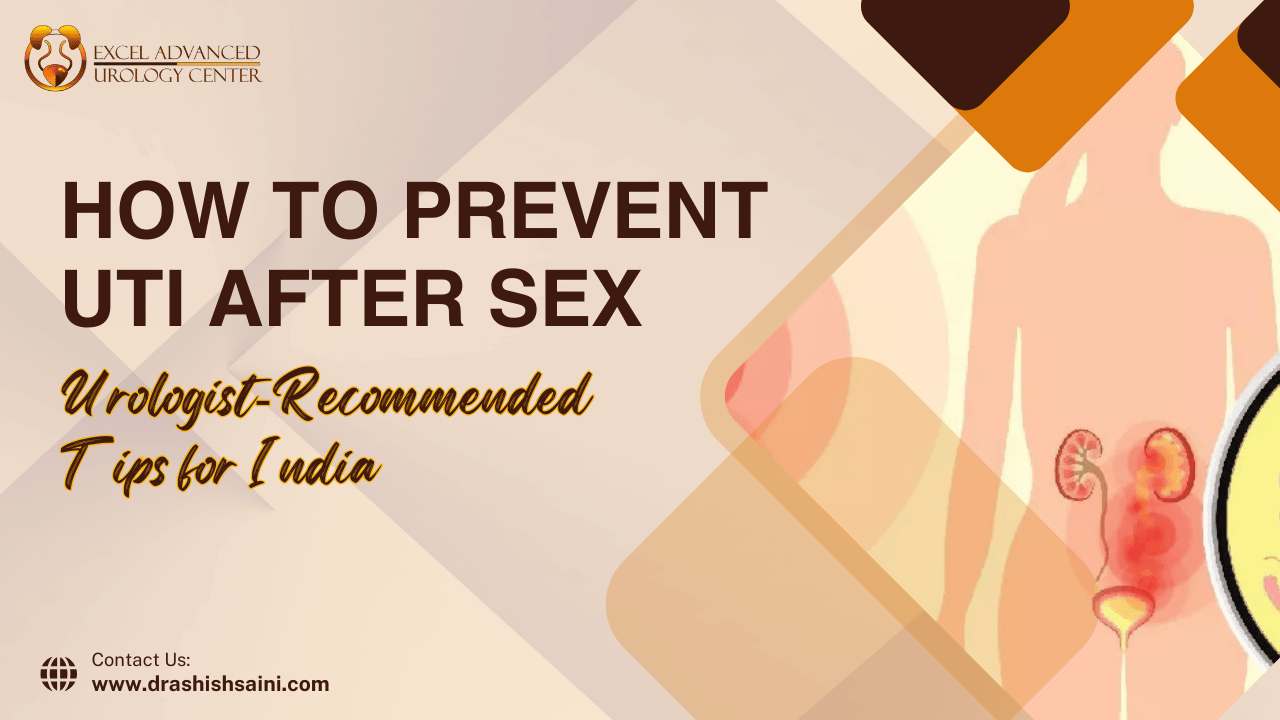
A UTI after sex happens when friction during intercourse pushes bacteria, usually E. coli, from the perineal area into the urethra. Women are more affected because the female urethra is shorter (about 4 cm) than the male urethra (about 20 cm), giving bacteria a shorter route to the bladder. Peeing within 15 minutes of sex, drinking 2 to 3 litres of water daily, wiping front to back, and avoiding spermicides prevent most post-sex UTIs. If you get a UTI after every intercourse, or if symptoms include fever, chills, or back pain, see a urologist for evaluation and possible post-coital antibiotics.
UTI After Sex at a Glance: Risk Factors vs Prevention Steps
Why Does Sex Cause a UTI?

Sex does not directly cause an infection. What it does is transfer bacteria already living on the skin, around the anus, and in the vagina into the urethra, the tube that carries urine out of the bladder. Once bacteria enter the urethra, they can travel up to the bladder and multiply. The most common culprit is Escherichia coli (E. coli), which normally lives harmlessly in the gut.
Two anatomical factors make this easier in women. The female urethra is around 4 cm long, compared to about 20 cm in men, so bacteria have a much shorter distance to cover. And the urethral opening sits close to both the vaginal opening and the anus, giving bacteria an easy path during intercourse.
Men can also get UTIs after sex, though it is far less common. In men, post-sex UTIs are usually linked to an underlying issue: an enlarged prostate slowing urine flow, urethral stricture, kidney stones, or unprotected anal intercourse. Any UTI in a man deserves a proper urology workup.
UTI After Sex in Women vs Men
In Women: The overwhelming majority of post-sex UTIs occur in women, and they are so common that the term "honeymoon cystitis" is still used for new sexual activity or a new partner. Risk peaks with frequent intercourse, spermicide use, and after menopause.
In Men: Post-sex UTIs are uncommon in men under 50 without underlying issues. When they occur, causes include benign prostatic hyperplasia (BPH), urethral stricture, urinary stones, phimosis with poor hygiene, or receptive anal sex without protection. Male UTIs after sex should not be dismissed as a hygiene issue. They need a urology evaluation to rule out flow obstruction or infection reservoirs.
How Long After Sex Do UTI Symptoms Start?
Most UTI symptoms after intercourse appear 24 to 48 hours later. Some women notice burning within a few hours, while others take 2 to 3 days for full symptoms. The timing depends on the bacterial load introduced and how quickly the immune system responds.
Common signs of a post-sex UTI include:
- Burning or stinging when you pee (dysuria)
- Feeling the urge to urinate often, even when little comes out
- Cloudy, dark, or foul-smelling urine
- Pink, red, or brown-tinged urine
- Lower belly or pelvic pressure
- Mild fever or feeling unwell
If you notice high fever, chills, nausea, vomiting, or pain in your side or back (flank pain), the infection may have moved to the kidneys and needs same-day medical care.
10 Doctor-Approved Ways to Prevent UTI After Sex

1. Pee within 15 minutes of sex
This is the single most effective step. Urinating flushes bacteria out of the urethra before they climb to the bladder. Even a small volume helps. If you cannot go right away, drink a full glass of water and try again in 10 minutes.
2. Stay hydrated through the day
Aim for 2 to 3 litres of water daily. Well-hydrated urine dilutes bacteria and flushes the urinary tract every few hours. Pale yellow urine is the target. Dark yellow urine means you are behind on fluids and at higher risk of infection.
3. Wipe front to back, always
This one habit prevents a large share of UTIs. Wiping back to front drags E. coli from the anal area to the urethral opening. Use fresh toilet paper with every wipe.
4. Wash the genital area before and after sex
A quick rinse with warm water (not harsh soap) removes surface bacteria for both partners. Avoid douching or scented washes, which strip protective vaginal flora and actually raise UTI risk.
5. Avoid spermicides and diaphragms
Spermicidal jelly kills Lactobacillus, the good bacteria that keep the vaginal microbiome hostile to E. coli. Diaphragms can press on the urethra and prevent complete bladder emptying. If you get recurrent UTIs, switch to plain latex condoms or another contraceptive method.
6. Use water-based lubricant
Friction is a major trigger. Dryness during intercourse traumatises the urethra and vaginal opening, making bacterial invasion easier. Water-based lubricant reduces friction and is safe with condoms. Skip petroleum-based products, which can degrade latex and irritate tissue.
7. Choose breathable cotton underwear
Synthetic fabrics trap heat and moisture, creating an ideal home for bacteria. Cotton lets the skin breathe. Change out of sweaty gym clothes and wet swimwear promptly.
8. Consider probiotics
Oral or vaginal probiotics containing Lactobacillus rhamnosus or Lactobacillus reuteri may help restore healthy vaginal flora and reduce UTI recurrence. Live-culture yogurt, kefir, and traditional kanji are natural sources. Speak with your doctor before starting a supplement.
9. Use vaginal estrogen if you are post-menopausal
Postmenopausal women often develop recurrent UTIs because low estrogen thins urethral and vaginal tissue and shifts the microbiome. A low-dose vaginal estrogen cream or ring, prescribed by a doctor, restores tissue health and can dramatically cut infection rates.
10. Ask about post-coital antibiotic prophylaxis
For women with frequent post-sex UTIs (two or more in six months), a single low-dose antibiotic taken within two hours of intercourse can prevent infections. This must be prescribed by a urologist after ruling out anatomical or hormonal causes.
Can You Have Sex With a UTI?

It is best to avoid intercourse while you have an active UTI. Sex during infection is usually painful, can push bacteria deeper into the urinary tract, and may worsen bladder inflammation. Wait until symptoms fully clear and you have finished your full course of antibiotics. Most urologists advise a few extra days after treatment ends before resuming intercourse.
"My Boyfriend Keeps Giving Me UTIs" — What Does That Actually Mean?
UTIs are not sexually transmitted infections. Your partner is not infected. But sex with him can introduce his skin and genital bacteria into your urethra. In some cases, an uncircumcised partner with poor hygiene, or a partner with an untreated urinary infection or prostatitis, can raise your risk.
If UTIs happen after every intercourse, the fix is almost always on your prevention side (pee after, hydrate, use a lubricant, drop the spermicide) rather than treating your partner. A urologist can evaluate both partners if the pattern continues despite prevention.
Recurrent UTI After Sex: When to See a Urologist
Book a urology consultation if you have any of the following:
- Two or more UTIs within six months, or three or more in a year
- Symptoms that return within days of finishing antibiotics
- Blood in your urine
- Fever, chills, back or side pain
- Pain during or right after sex
- Postmenopausal recurrent infections
- UTI in a man of any age
A specialist will investigate underlying causes: anatomical variations, kidney stones, incomplete bladder emptying, urethral stricture, prostate obstruction, or estrogen deficiency. Depending on findings, treatment may include post-coital antibiotics, vaginal estrogen, methenamine, D-mannose, or, in rare cases, surgical correction. For related symptoms that mimic UTI, read our guide on burning urination causes beyond UTI.
When UTI Symptoms After Sex Signal a Kidney Infection
Bacteria that reach the bladder can climb further to the kidneys. Warning signs of a kidney infection (pyelonephritis) after sex include high fever above 101 F, shaking chills, nausea and vomiting, and pain in the flank or lower back. This needs urgent urological care because an untreated kidney infection can cause permanent scarring. Learn more about urinary bladder conditions and urethral infections.
Book a Consultation
If UTIs after sex are affecting your quality of life, book a consultation with Dr. Ashish Saini at Excel Advanced Urology Center, Greater Kailash 1, New Delhi. You will get a personalised evaluation for recurrent UTIs, hormonal causes, and a treatment plan built to stop the cycle rather than just clear the current infection.