
}})
Understanding your period blood colour is one of the simplest yet most powerful ways to monitor your reproductive health. Many women search for questions like “Is brown period blood normal?” or “What does black period blood mean?”—and the truth is, most colour changes are completely normal.
However, sometimes these colours can signal underlying health issues.
This detailed, medically-informed guide will help you understand the period blood colour meaning, what’s normal, what’s not, and when to consult a doctor.
Why Does Period Blood Colour Change?

Your menstrual blood isn’t always bright red—and that’s perfectly normal.
The main reason behind colour variation is oxidation. When blood stays longer inside the uterus or vagina, it reacts with oxygen and becomes darker.
Other factors include:
- Flow speed (heavy vs light)
- Hormonal changes
- Stage of your menstrual cycle
- Mixing with cervical mucus
That’s why your period may start bright red, turn dark red, and end brown or black.
What is a Healthy Period Blood Colour?
A healthy period blood colour can range between:
- Bright red
- Dark red
- Pink
- Brown
- Black
All of these can be normal depending on timing and symptoms.
Important: Colour alone doesn’t define health—symptoms matter more.
1. Bright Red Period Blood Meaning
What it means:
- Fresh, newly shed blood
- Healthy uterine lining
- Normal flow (especially first 1–2 days)
Bright red blood typically appears during heavy flow days when blood exits quickly.
When to worry:
- Extremely heavy bleeding (soaking pad every 1–2 hours)
- Large clots
- Severe pain
2. Dark Red Period Blood Meaning
What it means:
- Slightly older blood
- Normal mid-cycle flow
As the flow slows, blood stays longer in the uterus and becomes darker.
Completely normal during the middle or later days of your period
3. Brown Period Blood Meaning
What it means:
- Old blood that has oxidised
- Common at the start or end of the period
Brown period blood is one of the most searched concerns—and in most cases, it’s harmless.
It usually indicates leftover blood from the previous cycle or slow flow.
Common causes:
- Beginning or end of period
- Light flow
- Hormonal fluctuations
When to worry:
- Brown discharge with foul smell
- Persistent spotting instead of full periods
- Pain or irregular cycles
4. Black Period Blood Meaning
What it means:
- Very old blood
- Slow flow or delayed shedding
Black period blood can look scary—but it’s often just oxidised blood that took longer to exit the body.
Common situations:
- Start or end of period
- After a missed or delayed cycle
When to worry:
- Bad odor
- Fever or pelvic pain
- Unusual discharge
These may indicate infection or retained blood.
5. Pink Period Blood Meaning
What it means:
- Blood mixed with cervical mucus
- Light flow or spotting
Pink blood is usually seen:
- Just before periods begin
- During light spotting
This happens when blood mixes with vaginal discharge.
Possible causes:
- Low estrogen levels
- Early pregnancy spotting
- Ovulation spotting
When to worry:
- Frequent pink discharge between periods
- Watery pink discharge with unusual symptoms
6. Other Period Blood Colours (Quick Guide)
Orange Blood
- May indicate infection if accompanied by odour or itching
Grey Blood
- Could signal infection or miscarriage
- Needs immediate medical attention
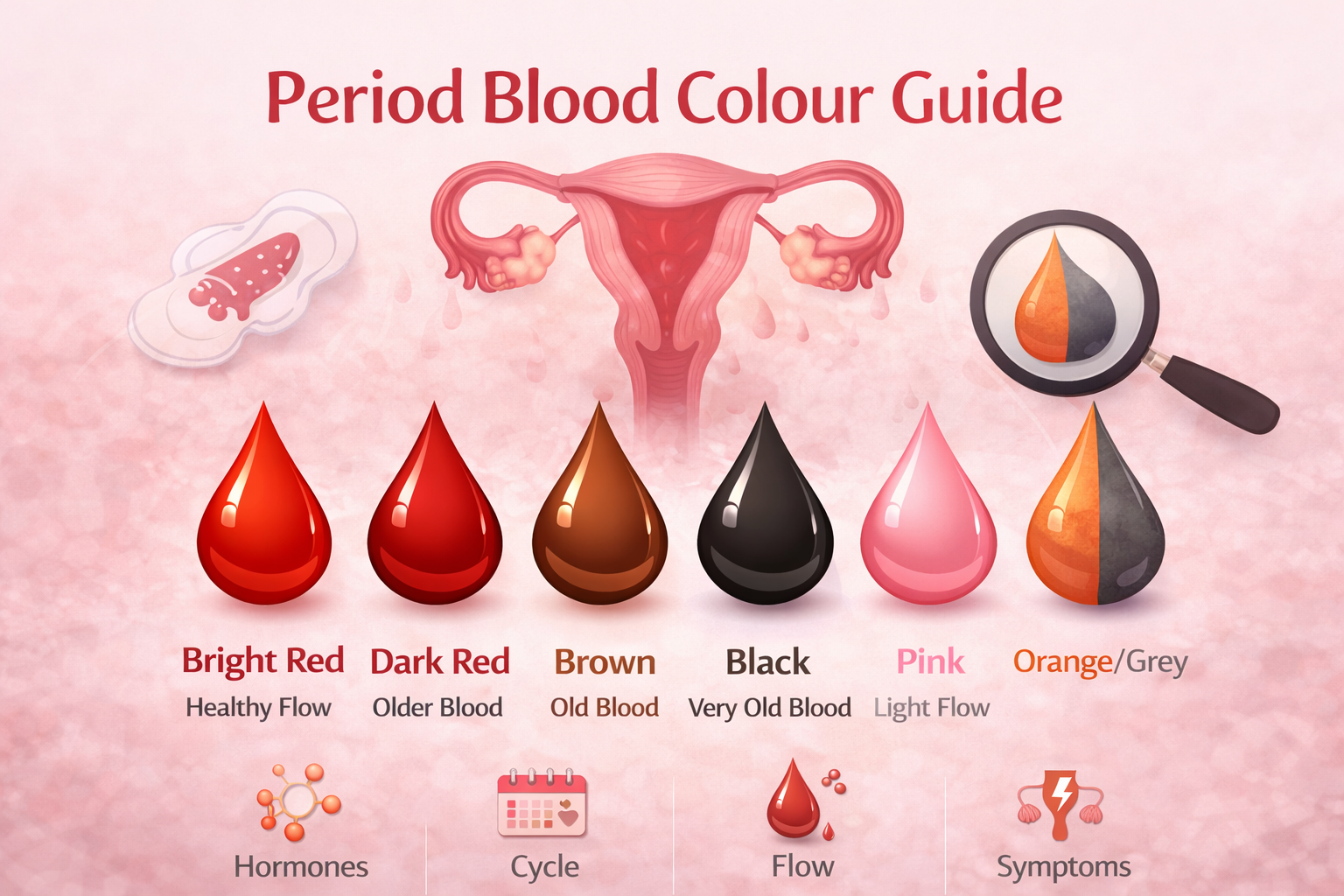
Period Blood Colour Chart (Quick Overview)
| Colour | Meaning | Normal? |
|---|---|---|
| Bright Red | Fresh blood, healthy flow | ✅ Yes |
| Dark Red | Slightly older blood | ✅ Yes |
| Brown | Oxidised old blood | ✅ Yes |
| Black | Very old blood | ✅ Usually |
| Pink | Mixed with mucus, light flow | ✅ Yes |
| Orange/Grey | Possible infection | ⚠️ No |
When Should You See a Doctor?

While most period blood colour changes are normal, consult a gynaecologist if you notice:
- Period lasting more than 7 days
- Extremely heavy bleeding
- Foul-smelling discharge
- Severe pelvic pain
- Bleeding between periods
- Sudden drastic changes in the cycle
These could indicate conditions like:
- Hormonal imbalance
- Fibroids
- Infection
- PCOS
Expert Insight: What Matters More Than Colour
Doctors emphasise that patterns and symptoms matter more than colour alone.
Track:
- Cycle length
- Flow intensity
- Pain levels
- Unusual discharge
Even though colour changes are common, consistent abnormalities should never be ignored.
Conclusion
Your period blood colour is like a health signal—it changes naturally throughout your cycle.
Key Takeaways:
- Brown and black blood = usually old blood (normal)
- Bright red = healthy, fresh flow
- Pink = light flow or hormonal variation
- Colour changes are normal—but symptoms matter