
}})
Quick Answer: Does Beer Help Pass Kidney Stones?
Beer may increase urination temporarily, but it does not dissolve kidney stones. In many cases, alcohol can lead to dehydration later, which may worsen kidney stone pain and increase stress on the kidneys. Beer is not a recommended or reliable treatment for kidney stones.
Why People Believe Beer Works for Kidney Stones
The belief that beer helps with kidney stones usually comes from one simple observation: after drinking beer, many people urinate more frequently. Since kidney stones are passed through urine, it seems logical to assume that increased urination will accelerate the process.
This idea has been shared for years as a common home remedy. Some people even report that their stone passed after drinking beer, which strengthens the myth.
However, passing a stone naturally depends on several factors, such as stone size, stone location, swelling in the urinary tract, and your hydration level overall. A stone can pass after drinking beer, but that does not mean beer caused the stone to pass.
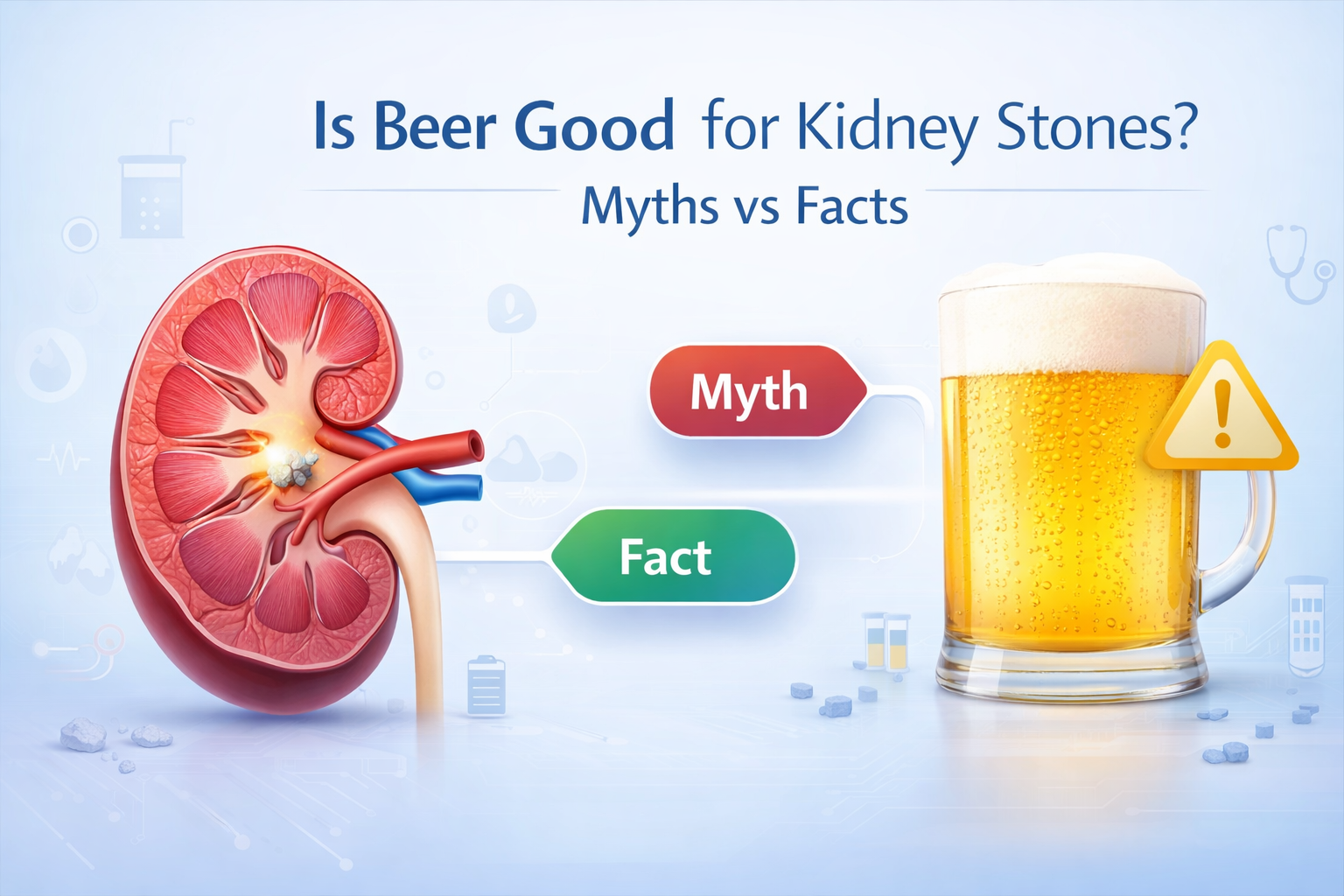
Myths vs Facts About Beer and Kidney Stones
Myth 1: Beer dissolves kidney stones
Fact: Beer cannot dissolve kidney stones. Stones are made from hard mineral crystals like calcium oxalate, uric acid, struvite, or cystine. Alcohol does not break down these minerals.
Myth 2: Beer flushes kidney stones faster
Fact: Beer may increase urine output for a short time, but alcohol can cause dehydration later. Dehydration makes urine more concentrated, which can worsen symptoms and may increase the risk of stone formation.
Myth 3: Drinking beer is safe during kidney stone pain
Fact: Kidney stone pain often comes with nausea, vomiting, or dehydration. Alcohol may worsen stomach irritation and can interfere with medications. If your stone is causing blockage or infection, alcohol may make the situation worse.
Myth 4: Beer prevents kidney stones from coming back
Fact: Preventing kidney stones is mostly about long-term hydration, diet management, and addressing the specific stone type. Beer is not a preventive treatment.
What Beer Actually Does to Your Kidneys
Your kidneys filter waste from blood and help maintain the balance of water, salts, and minerals in your body. When you drink alcohol, it affects how your body regulates fluids.
Beer can temporarily increase urination because alcohol reduces the activity of antidiuretic hormone (ADH), which normally helps your body retain water. With lower ADH levels, your body produces more urine and loses more fluid.
At first, this may feel like the body is “flushing out” something. But after a while, the increased fluid loss can lead to dehydration. Dehydration can make urine more concentrated, which may irritate the urinary tract and can worsen kidney stone discomfort.
So, the short-term effect may look helpful, but the long-term effect can be harmful.
Can Beer Help Pass a Small Kidney Stone?
Sometimes, people drink beer and then notice that their kidney stone passes within a day or two. This creates the impression that beer helped.
In reality, small kidney stones often pass naturally without any special remedy. If the stone is already small and moving toward the bladder, it may pass with regular hydration and time.
Beer is not considered a safe or recommended method to help pass stones, even if the stone is small. Water is a better option because it supports hydration without the dehydration risk alcohol carries.
Risks of Drinking Beer When You Have Kidney Stones
Using beer as a kidney stone remedy can increase health risks, especially if you are already dehydrated or in severe pain. Here are the main concerns.
1. Dehydration can worsen stone pain
Alcohol causes fluid loss. Dehydration can increase stone pain and slow recovery.
2. Increased stress on the kidneys
If your kidneys are already irritated due to a stone, alcohol may increase the workload and discomfort.
3. Stomach irritation and nausea
Kidney stones commonly cause nausea and vomiting. Beer may worsen acidity and stomach upset.
4. Risk of complications if infection is present
If a stone is associated with a urinary infection, symptoms such as fever, chills, burning urine, or cloudy urine can appear. Drinking alcohol in this situation is not safe and may delay urgent medical care.
5. Alcohol can affect medications
Many people take pain relievers or prescribed medicines during kidney stone episodes. Alcohol may increase side effects or reduce medication safety.
Who Should Avoid Beer Completely During Kidney Stone Problems
Beer should not be used as a remedy if you fall into any of the following categories:
- Chronic kidney disease (CKD)
- High blood pressure
- Diabetes
- History of recurrent kidney stones
- Single kidney
- Liver disease
- Pregnancy
- Symptoms of urinary infection (fever, chills, burning urination)
- Severe vomiting or inability to keep fluids down
- Current use of strong pain medicines or sedatives
If you have any of these, alcohol can increase risks significantly.
What Actually Helps Pass Kidney Stones Safely
If your goal is to pass a kidney stone naturally, focus on methods that support hydration and reduce complications.
1. Drink enough water
Water is the most effective and safest option. It helps dilute urine and supports the movement of the stone.
Most people benefit from drinking enough water to keep urine light yellow or nearly clear. In hot climates, you may need more.
2. Lemon water (citrate support)
Lemon contains citrate, which may help prevent certain stones from forming and may support a healthier urine environment. Lemon water also encourages more fluid intake.
Make sure you do not add too much sugar, as sugary drinks can worsen stone risk.
3. Coconut water
Coconut water supports hydration and provides electrolytes. It can be helpful, especially if you are sweating a lot or feel weak.
4. Barley water
Barley water is commonly used as a hydration drink in many households. It supports fluid intake and urine flow, but should be seen as supportive, not a cure.
5. Doctor-guided medicine
Doctors may prescribe pain relief and medications that relax the ureter muscles to help the stone pass more easily. These should be used only under medical advice.
Kidney Stone Size Guide: Will It Pass Naturally?

Stone size matters a lot in deciding whether it can pass naturally.
1 to 4 mm stones
These often pass on their own with hydration and time.
5 to 7 mm stones
These may pass naturally, but the chance is lower. Pain can last longer, and medical monitoring is often needed.
8 mm or larger stones
These often do not pass naturally and may require treatment such as laser procedures or shockwave therapy.
Warning Signs You Should Not Ignore
Some kidney stone symptoms require urgent medical attention. Seek help immediately if you experience:
- Fever with chills
- Severe pain that does not improve
- Continuous vomiting
- Heavy blood in urine
- Difficulty passing urine or very little urine output
- Burning urination with fever
- Extreme weakness or dehydration
These signs may indicate obstruction or infection, which can become dangerous if ignored.
How Kidney Stones Are Diagnosed
Doctors confirm kidney stones through tests that show stone size, location, and kidney health. Common tests include:
- Urine test
- Ultrasound
- CT scan (KUB) for accurate results
- Kidney function blood tests
- Stone analysis (if the stone passes out)
Correct diagnosis helps doctors choose the safest treatment based on your stone type and size.
Treatment Options if the Stone Does Not Pass
If the stone is large, stuck, or causing complications, medical treatment is the safest option.
ESWL (Shockwave Lithotripsy)
A non-invasive method that uses shockwaves to break certain stones into smaller pieces.
Ureteroscopy with laser
A scope is passed through the urinary tract, and a laser breaks the stone. This is one of the most common and effective procedures.
PCNL (for large stones)
A procedure used for bigger kidney stones, usually done through a small cut near the kidney.
Your doctor will recommend the best option depending on your situation.
Final Verdict: Beer for Kidney Stones, Myth or Fact?
Beer is not a cure for kidney stones. While it may increase urination temporarily, it does not dissolve stones and can cause dehydration later. Dehydration can worsen pain and may increase kidney stress.
If you want to pass a kidney stone safely, focus on water intake, supportive fluids like lemon water, and doctor-guided treatment. If symptoms are severe or you notice fever, vomiting, or difficulty urinating, seek medical help without delay.